
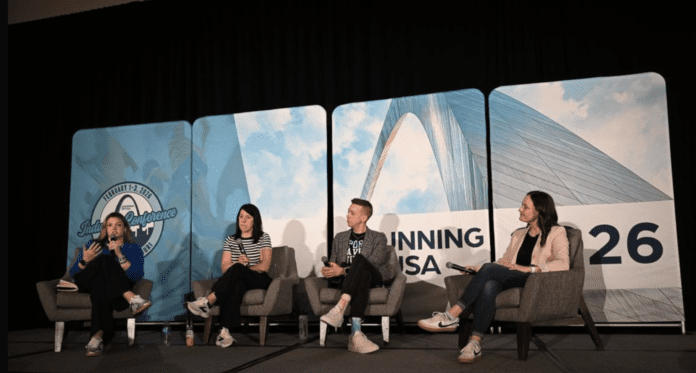
The running industry is currently riding a wave of unprecedented momentum. From the historic halls of the Union Station Hotel in St. Louis, Missouri, the 22nd annual Running USA Industry Conference presented by haku served as a vibrant epicenter for the leaders, innovators, and organizers shaping the future of the sport. With approximately 630 attendees, flirting with record-breaking numbers, the gathering underscored a pivotal moment for endurance sports: a period of rapid growth, technological evolution, and a profound shift in participant demographics.
As Executive Director of Running USA Shawn Sullivan noted, the atmosphere was one of high energy and optimism, reflecting what many are calling a modern “running boom”. For the everyday runner and the industry professional alike, the insights gleaned from this three-day summit offer a roadmap for where the sport is headed and how it intends to stay there.
A New Generation Takes the Lead
According to Sullivan, the industry is currently experiencing a “powerful moment” of momentum and growth that many are calling a modern “running boom”. Over 200 first-time attendees joined the event, signaling a generational and cultural shift within industry leadership. This influx of newcomers—hailing from diverse backgrounds and younger demographics—is beginning to mingle with veteran pros, creating a unique exchange of ideas that is vital for the sport’s longevity.
“We’re starting to see younger folks and folks from all different backgrounds enter the space,” Sullivan observed. This diversity is being intentionally fostered through initiatives like the “Lead Collective,” a program designed to provide a platform for individuals from underrepresented communities to tell their stories and integrate into the running business ecosystem.
The Technology Frontier: AI and Beyond
Technology was the undisputed protagonist of the 2026 programming. In an era where efficiency and personalization are paramount, the industry is looking toward artificial intelligence (AI) to solve complex operational challenges.
The conference kicked off with an “Innovation Showcase” featuring companies like New Run, which is leading the charge in bringing AI to race management. Throughout the event, sessions led by board members and tech leaders explored the practical applications of these tools:
• Automation in Tech: Jackie Levi, Chief Strategy Officer at haku, discussed the “next chapter” in event technology, focusing on tools built to accelerate growth and automate tedious processes.
• Operational Efficiency: Sessions explored how race directors can utilize AI throughout the entire event cycle—from initial registration to post-race engagement.
• Impact Measurement: Companies like EB Systems demonstrated new ways to measure the tangible impact of running events on their host communities, providing race directors with better data to secure municipal support and sponsorships.
Keynotes and Inspiration: Overcoming Adversity
While the business of running is data-driven, the heart of the sport remains deeply human. This was exemplified by the keynote address from Olympic hurdler and St. Louis native Dawn Harper Nelson. Her moving talk on overcoming adversity through various chapters of her life “brought the house down,” serving as a reminder of the resilience that defines the running community.
The programming also addressed the “State of the Sport,” featuring a panel where experts analyzed participation trends. A recurring theme was the sheer demand for races; events are selling out faster than ever, driven by a public eager for connection and new experiences.
The Retention Challenge: Why Runners Come and Go
Despite the current “boom,” industry leaders are wary of complacency. A primary concern discussed was athlete retention. Data from registration companies suggests that while people are running more than ever, they aren’t necessarily returning to the same races year after year.
“Runners are not always going back to the same race,” Sullivan explained, noting that many athletes are currently driven by a desire to travel and try new things. To combat this, the conference focused heavily on engagement strategies:
• Year-Round Connection: The goal is to move away from being a “once-a-year” interaction and instead engage with athletes through social media, email marketing, and AI tools consistently.
• Feedback Loops: A major message to the running public is the industry’s desire for feedback. Organizers are increasingly relying on data points and surveys to ensure they are delivering the types of events that resonate with the 35+ “everyday runner” demographic.
Sustainability and Community Impact
The conference did not shy away from the industry’s broader responsibilities. Tina Muir, a prominent voice in the space and Running USA board member, led discussions on sustainability, challenging race directors to minimize the environmental footprint of large-scale events.
Furthermore, the concept of “Running Toward Community” was a focal point, with examples like the 500 Festival in Indianapolis illustrating how races can serve as more than just a competition, but as a cornerstone of local culture and social cohesion.
Networking in the Gateway City
The choice of St. Louis as a host city provided a backdrop of historic charm and logistical ease. The Union Station Hotel served as a “perfect venue,” keeping vendors, meals, and sessions in close proximity to facilitate the networking that Sullivan describes as the “critical” element of the conference.
Even the traditional “shakeout runs” took on a local flavor. Despite “frigid temperatures and icy sidewalks,” hundreds of attendees participated in morning runs that took them through the “Gateway to the West” and past the iconic St. Louis Arch. These runs, along with nightly receptions at various iconic city venues, allowed attendees to mingle outside the traditional seminar format.
The Diverse Ecosystem of Running
The “vendor space” at the conference reflected the sheer scale of the endurance economy. It wasn’t just race directors in attendance; the room was filled with:
• Apparel and Awards: Companies providing the shirts and medals that runners cherish.
• Timing and Tech: The experts responsible for the “precision” of the race day experience.
• Sponsors and Marketers: Brands looking to connect with the highly desirable runner demographic.
This collaborative environment is intended to put decision-makers in the same room as innovators, theoretically improving the quality of every race on the calendar.
Looking Ahead: 2027 and Beyond
As the conference concluded, the focus shifted toward “packaging the story” of running. With the current high energy and optimism, the next step for the industry is to better quantify the “vibe” into actionable data—understanding who is running and what they need to stay motivated.
The 2026 Running USA Industry Conference proved that while the sport is rooted in the simple act of putting one foot in front of the other, the business behind it is becoming more sophisticated and inclusive than ever. As Sullivan aptly summarized, Running USA remains “where the running industry connects”.