
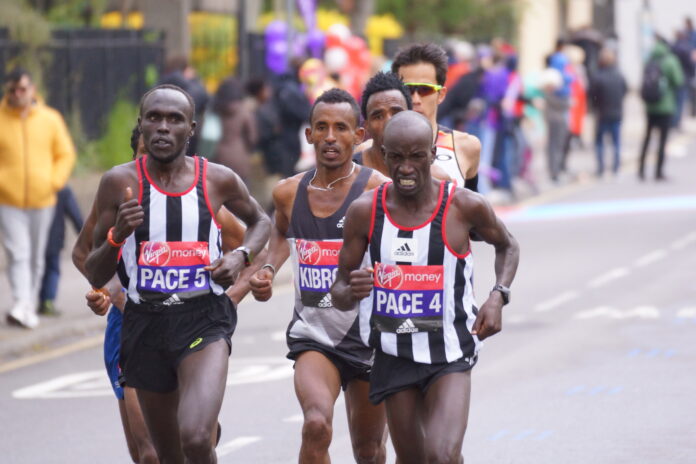
The TCS London Marathon is exploring a radical overhaul for its 2027 elite women’s field, with race organizers revealing they are open to introducing male runners and pacemakers into the race to shatter the women’s world record.
First reported by The Independent, London Marathon CEO Hugh Brasher confirmed that “all things are on the table” as organizers consult directly with elite athletes ahead of a final field announcement in January.
“All Things Are on the Table”
For nearly two decades, major Abbott World Marathon Majors have kept elite women’s fields strictly separate with female-only pacemakers to protect the integrity of historical records. However, the pacing landscape has shifted dramatically, sparked by historic performances like Tigst Assefa’s jaw-dropping world record runs utilizing male pacesetters.
Speaking on potential format changes for the 2027 event—which is already expanding into a historic two-day format with men racing Saturday and women headlining Sunday—Brasher noted that London is ready to rethink tradition if it helps athletes chase history.
“We’re prepared to mix it up. We very much talk to the athletes about what their goals are,” Hugh Brasher told The Independent.
“In the past, we’ve played around with it. Paula [Radcliffe], when she ran 2:15, had the women’s-only record, so there were men running around her… All things are on the table, so many things we’re going through, we have ideas.”
What This Means: Deciphering the “Mixed vs. Women-Only” Rulebook
To understand why this is a major deal for marathoning, you have to look at how World Athletics (the sport’s governing body) categorizes world records:
- The Women-Only Record (WO): Set in a race featuring only female competitors (or female pacers). Paula Radcliffe’s legendary 2:15:25 from London in 2003 was originally considered a mixed-race mark, but World Athletics later drew strict lines.
- The Mixed-Gender Record: Set in a race where women run alongside male competitors and male pacemakers (such as Tigst Assefa running 2:11:53 in Berlin).
Because male pacemakers provide a significant aerodynamic draft and a steady, metronomic cadence that is difficult to replicate with female-only pacing squads, times in mixed races are generally faster. By considering male runners in the elite women’s race, London is essentially weighing whether to prioritize record-breaking speed and athlete preferences over maintaining a pure “women-only” racing ecosystem.
Consulting the World’s Best
The debate centers heavily on the speed required to attack the sport’s most elite barriers. Because women-only races often lack the deep packs and pacing reliability found in mixed fields, London’s leadership is weighing what format the athletes actually prefer.
Organizers are expected to finalize and announce the structure of the elite fields in January, setting the stage for what could be one of the biggest rule-and-format pivots in modern marathon history.
Source attribution: First reported by Jack Rathborn for The Independent.