
While the world’s elite and amateur runners have long fixated on the “Six Star” journey of the Abbott World Marathon Majors, a new challenger has officially entered the arena. This week, in the regal halls of Schönbrunn Palace in Vienna, race directors and organizers officially launched the European Marathon Classics (EMC)—a brand-new series designed to unite the continent’s most historic and atmospheric races.
With the TCS London Marathon—a cornerstone of the World Marathon Majors—serving as a founding member, the running world is asking: Is this the “European Majors”?
What are the European Marathon Classics?
The EMC is a collective of eight iconic European marathons. The series isn’t just a calendar; it’s a multi-year challenge. To earn the title of “European Marathon Classics Finisher,” runners must complete five of the eight races, each in a different city.
The Founding Eight:
- Rome (Acea Run Rome The Marathon)
- Vienna (Vienna City Marathon)
- London (TCS London Marathon)
- Madrid (Zurich Rock ’n’ Roll Running Series)
- Copenhagen (Copenhagen Marathon)
- Warsaw (Warsaw Marathon)
- Lisbon (EDP Lisbon Marathon)
- Frankfurt (Mainova Frankfurt Marathon)
The “Boots on the Ground” Advantage: Historical Results Count
In a move that set the room buzzing in Vienna, the EMC announced they are partnering with Let’s Do This to allow runners to claim past results. Starting in the second half of 2026, if you ran London in 1995 or Frankfurt in 2010, those finishes will count toward your five-race total.
This is a massive departure from the Abbott World Marathon Majors, which only tracks finishes after a certain modern era. It’s a nod to the deep history of European running, honoring veterans who have been “boots on the ground” for decades.
How it Compares: EMC vs. World Marathon Majors (WMM)
| Feature | World Marathon Majors (WMM) | European Marathon Classics (EMC) |
| Global Reach | Global (Tokyo, Boston, London, Berlin, Chicago, NYC, Sydney) | Continental (Focus on Europe) |
| Prestige Level | The “Gold Standard” of professional marathon running. | Focus on “Classics”—culture, community, and heritage. |
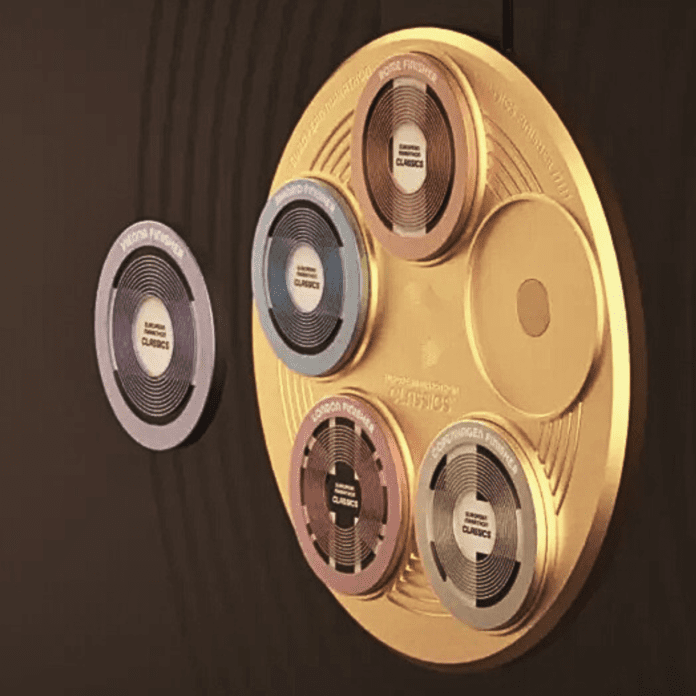
| The Medal | The 6-Star (soon 7-Star) “Six Star Finisher” medal. | A modular, magnetic disc medal that builds as you go. |
| Difficulty to Enter | Extremely high (lotteries, strict time qualifiers). | Accessible; free to join the series; varied entry paths. |
| Legacy Policy | Generally limited to recent decades. | Historical results (dating back to race inception) count. |
Why This Matters for MarathonJournal Readers
For the average marathoner, the World Marathon Majors has become a “bucket list” that is increasingly hard to tick off due to skyrocketing lottery demand and impossible qualifying times.
The European Marathon Classics offers a different kind of prestige. Instead of just chasing a “Star,” you are chasing the soul of European cities. London’s Hugh Brasher, a key architect of the EMC, noted that the series is about showing that “across Europe, we are better together than we are apart.”
The Verdict
The EMC isn’t trying to replace the Majors; it’s offering a more inclusive, culturally rich alternative. While the Majors remain the pinnacle for elite speed and global fame, the European Marathon Classics is positioning itself as the series for the “cultural runner”—the one who wants to see the Colosseum in March and the Brandenburg Gate (via London/Frankfurt) in the fall.
MarathonJournal will be following this series closely as it rolls out in late 2026. Are you going for the Classics or sticking to the Stars? Let us know in the comments.