What if the marathon—long defined by grit, competition, and finish times—was reimagined through a different lens? What if, instead of focusing solely on performance, it centered on belonging, support, and shared experience?
That’s exactly what Every Woman’s Marathon set out to do.
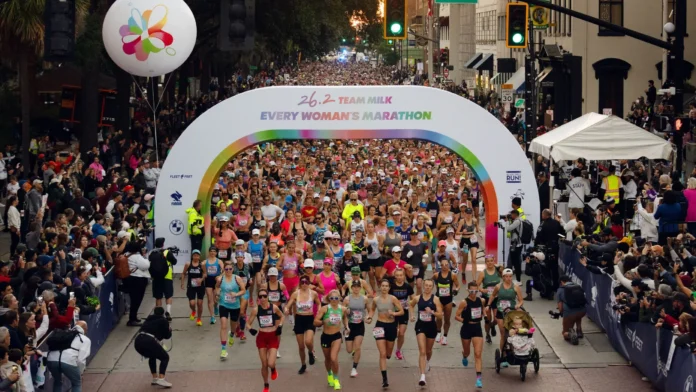
Created by Team Milk, this race isn’t just another stop on the marathon calendar—it’s a movement. One shaped by listening to women runners, understanding their needs, and building an experience that reflects not just how women run, but why they run.
From its inaugural race in Savannah in 2024 to Scottsdale in 2025, and now looking ahead to New Orleans in 2027, Every Woman’s Marathon is steadily reshaping what the marathon experience can look like.
Listening First: The Foundation of a Different Kind of Race
The story of Every Woman’s Marathon begins not with a race director’s vision, but with data—and more importantly, with voices.
Before anything was built, Team Milk conducted extensive research with women runners. What they found was both eye-opening and, in many ways, overdue for acknowledgment:
- 60% of women felt endurance races cater more to men
- 88% wanted events that embrace diverse abilities, body types, and life stages
- 80% wished there was less pressure around strict time limits
- 9 in 10 said community is a key motivator
These weren’t minor gaps—they were fundamental disconnects between the traditional race model and the lived experience of women runners.
So instead of adjusting around the edges, Team Milk built something new from the ground up.
More Than a Race: A Full Experience
One of the most defining aspects of Every Woman’s Marathon is that it’s not just about race day—it’s about the entire journey.
From the moment runners sign up, they’re supported with training guidance, nutrition resources, and recovery strategies. This includes practical, approachable tools—like easy-to-follow recipes and fueling strategies—that help runners feel confident heading into race day.
And then there’s race weekend itself.
Unlike traditional marathons that can feel transactional—packet pickup, race, go home—Every Woman’s Marathon leans into the idea of a destination experience. It’s designed to be something runners look forward to not just for the miles, but for the moments in between.
The Wellness Fair and Expo become gathering spaces. The Finish Line Festival becomes a celebration. The energy throughout the weekend feels intentional—less about rushing and more about being present.
The Details That Matter
What truly sets this race apart is how deeply it considers the real-life needs of women runners—both the obvious and the often overlooked.
You see it in the logistics:
- Extended course time (up to eight hours), easing pressure on slower runners
- Thoughtfully placed aid stations and cheer zones
- Streamlined race communications and logistics
And you feel it in the details:
- Lactation pods for breastfeeding mothers
- VI-PEE porta-potties stocked with essentials like period products and hair ties
- Recovery zones with professional stretching and Normatec boots
These aren’t “extras”—they’re signals. Signals that the race was built with intention, empathy, and awareness.
And runners notice.
Post-race surveys show overwhelmingly positive feedback:
- 91% rated the on-course experience as good or excellent
- 80% would recommend the race to a friend
- 74% said they’d likely return
That kind of response doesn’t happen by accident—it reflects a race experience that resonates on a deeper level.
The Power of the “Sisterhood of Strides”
If there’s one phrase that captures the spirit of Every Woman’s Marathon, it’s this: the sisterhood of strides.
It’s not just branding—it’s something runners feel.
It shows up in training groups that form months before race day. In women traveling together across the country to run side by side. In strangers cheering each other on like lifelong friends.
What could be an individual pursuit becomes something shared.
And that shift matters.
Because while running is often seen as a solo sport, research—and lived experience—tell us that connection is one of the strongest motivators. When women feel supported, they’re more likely to start, to continue, and to push further than they thought possible.
Today, that sense of connection extends far beyond race weekend. Team Milk’s global community includes more than 40,000 women who share advice, encouragement, and real-life experiences.
Redefining Success in the Marathon World
Traditionally, marathons have been defined by numbers:
Finish times. Rankings. Personal records.
Every Woman’s Marathon doesn’t reject those goals—it expands them.
Yes, runners can chase ambitious targets like qualifying for the Boston Marathon. But they can also define success in entirely different ways:
- Finishing their first marathon
- Returning after injury
- Running postpartum
- Simply making it to the start line
And here’s the key: all of those achievements are treated as equally meaningful.
That shift in perspective changes everything.
It creates an environment where runners aren’t constantly measuring themselves against others—but instead are supported in pursuing their own version of success.
Stories That Stay With You
At the heart of Every Woman’s Marathon are the stories.
Stories like Citlalli Gomez, who completed her first marathon ten years after surviving an attack while out on a training run. Crossing the finish line wasn’t just about distance—it was about reclaiming something that had been taken from her.
Moments like receiving a medal from Kathrine Switzer carry a weight that goes beyond the race itself. They connect past and present, reminding runners of how far women’s running has come—and how much further it can go.
Through initiatives like “Rookie Route” and the documentary Forward is a Pace, these stories are amplified, showing a wide spectrum of what a runner looks like:
- A retiree returning after hip surgery
- A runner navigating a PCOS diagnosis
- Women who once believed a marathon wasn’t possible for them
These aren’t outliers—they’re the reality of the running community. And by highlighting them, the race helps more women see themselves in the sport.
Fueling the Journey: The Role of Nutrition
Another key pillar of Every Woman’s Marathon is education around fueling and recovery—areas where many runners, especially newer ones, often feel overwhelmed.
Research shows that:
- 70% of women runners are actively seeking more protein
- Many are looking to increase intake of calcium, vitamin D, and B12
That’s where milk enters the conversation—not as a trend, but as a practical, accessible option.
With its combination of carbohydrates, protein, and electrolytes, milk offers a simple way to support:
- Hydration
- Muscle recovery
- Bone health
On race day, that translates into something tangible: chocolate milk at the finish line. Backed by a 3:1 carb-to-protein ratio, it provides a quick, effective way to refuel during the critical recovery window.
But beyond the science, it’s the accessibility that matters. It’s not complicated, expensive, or exclusive—it’s something runners can easily incorporate into their routines.
Inclusivity in Action
Inclusivity is a word that gets used often—but here, it’s defined through action.
Every Woman’s Marathon is designed for a wide spectrum of runners:
- First-time marathoners
- Elite athletes
- Postpartum mothers
- Adaptive athletes
- Masters runners
It also provides practical accommodations, like allowing visually impaired runners to register guides at no cost.
Importantly, while the race is centered on celebrating women, it is open to all adults who want to be part of that mission—including transgender and non-binary participants and allies.
The goal isn’t to exclude—it’s to create more space.
Looking Ahead: The Future of the Race
As the race evolves, one thing remains constant: it continues to listen.
Feedback from past participants directly shapes future improvements, from course logistics to expo design. For 2027 in New Orleans, runners can expect:
- Extended course times
- Enhanced expo layouts
- Continued focus on community-driven experiences
There’s also excitement around future partnerships—particularly with women-led and mission-aligned brands that can further enrich the race weekend.
But perhaps the most important evolution isn’t logistical—it’s cultural.
A Shift That’s Bigger Than One Race
Every Woman’s Marathon isn’t just creating a better race—it’s influencing how races can be designed.
It challenges long-standing assumptions:
- That faster always means better
- That competition must come before connection
- That one model fits all runners
And in doing so, it opens the door for a more inclusive, more human approach to endurance sports.
Why It Matters
For many runners, signing up for a marathon is about more than fitness. It’s about proving something to themselves. It’s about growth, resilience, and identity.
What Every Woman’s Marathon does is amplify that experience—by surrounding it with support, understanding, and community.
It reminds runners that they don’t have to do something extraordinary alone for it to count.
And maybe that’s the biggest shift of all.
Because when the finish line becomes a shared celebration instead of a solitary goal, the marathon transforms—from a test of endurance into a powerful expression of connection.