

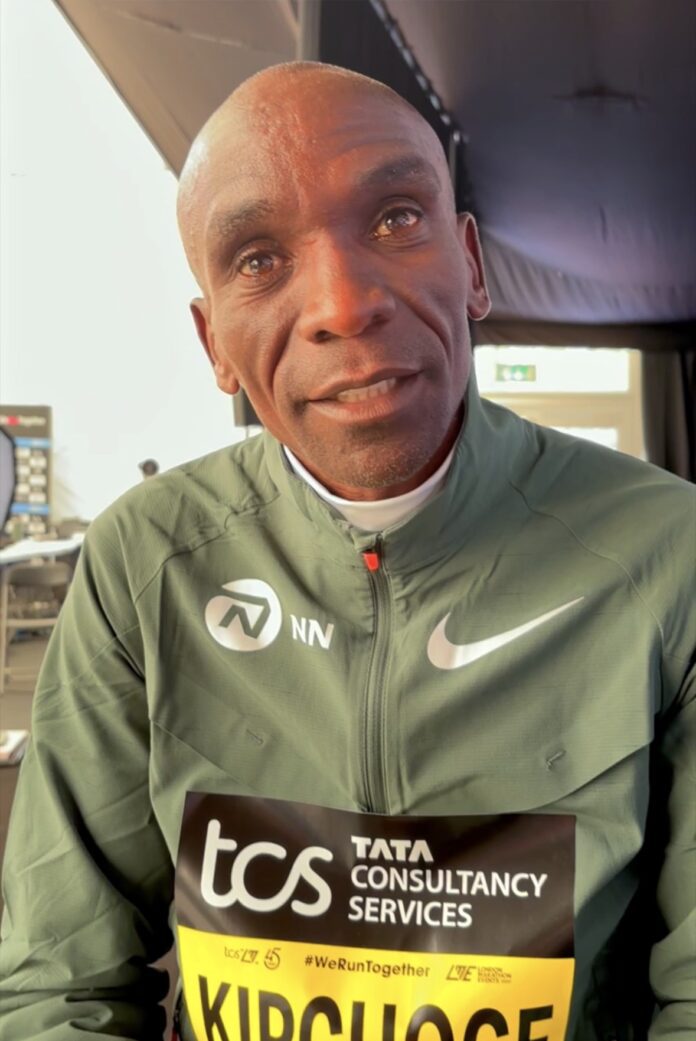
The announcement that Eliud Kipchoge will compete in the 2026 edition of the Sanlam Cape Town Marathon is far more significant than a legendary athlete adding another race to his schedule. Within the global marathon ecosystem, it signals something larger: a potential shift in how the sport’s most prestigious events are distributed across the world.
For decades, marathon running has been both global and geographically concentrated at the same time. The talent pool has long been international—particularly dominated by East African runners—but the sport’s most prestigious stages have historically been located in a handful of cities across Europe, North America, and Japan.
The World Marathon Majors—which include the Boston Marathon, London Marathon, Berlin Marathon, Chicago Marathon, Tokyo Marathon, and New York City Marathon—represent the pinnacle of the sport. These races define careers, attract the deepest elite fields, and receive the largest global audiences.
For years, Cape Town has been positioning itself as the next race capable of joining that group. Kipchoge’s decision to compete there suggests that the momentum behind that ambition is becoming increasingly real.
The Kipchoge Effect
Kipchoge’s presence at any marathon instantly transforms the event.
Widely regarded as the greatest marathon runner of all time, his race schedule carries enormous symbolic and practical significance. Every start line he joins becomes a focal point for the sport. Athletes, fans, media outlets, and sponsors pay attention.
This phenomenon—often described informally as the “Kipchoge effect”—has several tangible consequences.
First, elite participation tends to increase. Top athletes frequently seek the opportunity to race against Kipchoge, both to test themselves against the sport’s most dominant figure and to take advantage of the competitive conditions that usually emerge in races he enters. His presence often guarantees fast pacing, strong competition, and international attention.
Second, global media coverage expands dramatically. When Kipchoge competes, the race becomes part of the international sports conversation. Broadcasters, journalists, and sponsors treat the event differently, recognizing that audiences across the world will be watching.
Third, the race itself gains credibility. Having the most respected figure in marathon running choose a particular event sends a powerful signal about its legitimacy and prestige.
For a race pursuing Major status, those elements are invaluable.
A Race Auditioning for the World Stage
Becoming part of the Abbott World Marathon Majors is not simply a matter of popularity. The process involves meeting rigorous standards related to elite competition, broadcast quality, course organization, participant numbers, and international reach.
Cape Town has spent several years building toward those benchmarks. The race has invested in infrastructure, global promotion, and elite athlete recruitment in order to demonstrate that it can operate at the level expected of a Major.
Hosting Kipchoge effectively places the event under the sport’s brightest spotlight.
Managing an elite race featuring the most recognizable marathoner in the world becomes a test of every aspect of race organization—from media logistics and broadcasting to pacing strategies, security, and athlete management. If successful, the event gains the opportunity to demonstrate that it can handle the scale and complexity required of a Major marathon.
A Shift in the Geography of Marathon Running
The broader significance of Kipchoge racing in Cape Town lies in what it represents for the sport’s geography.
For decades, the narrative of distance running has followed a familiar pattern. Many of the world’s greatest marathon runners have emerged from East Africa—particularly Kenya and Ethiopia—yet the sport’s most prestigious races have historically taken place elsewhere.
Athletes train in places such as the Rift Valley, but their defining victories often occur thousands of miles away.
A major international marathon in Africa challenges that pattern.
It suggests a rebalancing of the sport’s global structure: not simply exporting talent from Africa to the world, but bringing the world’s attention to Africa as a stage for competition.
Kipchoge’s participation reinforces that idea. His decision to race in Cape Town highlights the possibility that the continent can host an event with the same prestige and international appeal as the traditional Major marathons.
The Symbolic Importance of Kipchoge’s Choice
There is also a deeper symbolic layer to this decision.
Despite being one of the most accomplished athletes in the history of the marathon, Kipchoge has spent most of his career competing in races outside the African continent. That pattern reflects the structure of the professional marathon circuit, where the largest prize purses, sponsorship opportunities, and global audiences have historically been concentrated.
Choosing Cape Town for this stage of his career therefore carries meaning beyond performance.
It signals recognition of a race—and a region—that has long been central to the sport’s talent pipeline but less visible as a host of global competition.
For many observers, it also represents an acknowledgment that the future of marathon running may involve a broader distribution of prestigious races around the world.
The Potential Impact on the Sport
If the Cape Town Marathon continues to grow and eventually joins the World Marathon Majors, the implications would extend well beyond elite racing.
Major marathons influence travel, tourism, and participation patterns across the running community. They shape where amateur runners aspire to compete and how global running culture develops.
A Major marathon in Africa would open an entirely new chapter in that story.
It would create opportunities for runners around the world to experience a different marathon destination—one with its own geography, culture, and history—while also bringing greater global attention to the continent’s role in the sport.
A Pivotal Moment for Cape Town
With Kipchoge on the start line, the 2026 Cape Town Marathon now carries significance that goes far beyond a single race result.
It represents an opportunity for the event to demonstrate that it belongs among the sport’s most prestigious competitions.
If the race successfully delivers a world-class event under the global spotlight, the 2026 edition could ultimately be remembered as a turning point—one that accelerated Cape Town’s journey toward becoming the first World Marathon Major on the African continent.
In that sense, Kipchoge’s participation is not simply about one athlete racing another marathon. It is about the future direction of the sport itself.