 , via Wikimedia Commons"
/>
, via Wikimedia Commons"
/>A massive structural shift in legacy race tracking is officially live. The European Marathon Classics (EMC)—the newly formed eight-race circuit that caught the running world’s attention during its inauguration earlier this year—has officially rolled out its digital historical results database.
Developed in a technical partnership with global registration giant LetsDoThis, the backward-compatible system allows distance runners worldwide to retroactively claim past finishes stretching back nearly half a century.
For international marathoners, particularly the thousands of marathon tourists from the United States who travel across the Atlantic each season, this development changes the entire challenge landscape. Rather than forcing athletes to build toward a multi-country challenge strictly from scratch, the EMC is honoring the deep history of European running by letting past life achievements count toward its master finisher status today.
Breaking Down the Circuit: One Distance, Eight Cities
To understand the significance of the new verification engine, it helps to understand the scope of the circuit itself. Often described as a more accessible, culturally rich alternative to the Abbott World Marathon Majors, the EMC links together eight of the most structurally unique, big-city 42.195-kilometer events on the European continent.
The events are deliberately scheduled across a rolling calendar from March through October:
- Acea Run Rome The Marathon (Italy)
- Vienna City Marathon (Austria)
- Zurich Rock ‘n’ Roll Running Series Madrid (Spain)
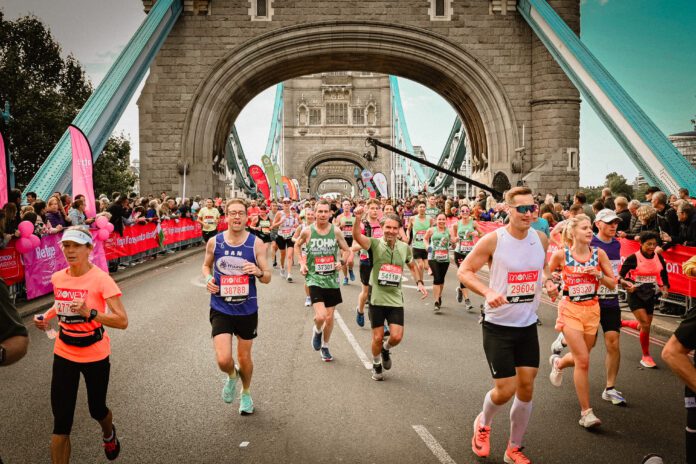
- TCS London Marathon (United Kingdom)
- Copenhagen Marathon (Denmark)
- Warsaw Marathon (Poland)
- EDP Lisbon Marathon (Portugal)
- Mainova Frankfurt Marathon (Germany)
To achieve the highly coveted title of European Marathon Classics Finisher, an athlete must cross the finish line of at least five of these eight distinct events. Crucially for amateur runners balancing heavy training cycles with family and travel budgets, there is no time limit to complete the journey.
How the Digital Verification Engine Works
What makes this week’s announcement a true industry first is the underlying tech framework. The engineers at LetsDoThis have spent months unearthing, digitizing, and unifying disparate timing archives from each independent race committee. The resulting database spans decades, going all the way back to Madrid’s inaugural 1978 race and Lisbon’s 1986 debut.
For runners who have spent decades logging international miles, checking your historical status is straightforward and entirely free:
- Create a Free Profile: Runners log on to the official platform at europeanmarathonclassics.eu.
- Search the Archives: Under the “My Journey” dashboard, users select a member marathon, pick the calendar year they ran, and input their name.
- Claim Digital E-Coins: Once the automated ledger verifies the match, a digital “e-coin” is instantly deposited into the user’s dashboard profile, signifying permanent credit toward the challenge.
- Manual Review Fallback: Because older physical race logs can occasionally contain spelling discrepancies or gaps, a dedicated manual review portal has been created. Runners can upload scans of vintage physical certificates or finisher photos to claim edge-case historical finishes.
The Ultimate Prize: A Magnetic Masterpiece
The ultimate goal of tracking down these past finishes is the physical hardware. Upon earning five digital coins across five separate host cities, runners qualify for a heavy, concentrically designed master medal.
The master medal features precision-machined magnetic slots built specifically to hold physical, high-relief metallic city coins. Each coin corresponds to one of the eight historic finish lines. As you complete or verify your five chosen cities, the individual coins snap directly into the master frame.
Challenge organizers have confirmed that because the verification engine has finalized its launch this summer, the very first physical master medals will be awarded on-site at the Warsaw Marathon finish line on September 27, 2026, followed by the autumn cycles in Lisbon and Frankfurt.
For American runners who may have tackled London in 2015, Rome in 2019, or Frankfurt back in 2012, the new verification platform means you might already be 60% or 80% of the way toward a major international running milestone.
Registration for the challenge and access to the historical search database are completely free at europeanmarathonclassics.eu.