

This Complete Guide is available as Full Video YouTube video walkthrough & Episode 311 of the Marathon Running Podcast as well.
1. Why the Cape Town Marathon Is a Global Priority Right Now
The Cape Town Marathon is not just another destination race—it is on the brink of becoming Africa’s first Abbott World Marathon Major.
- The 2027 Major Journey: The race is currently in a critical evaluation phase. To meet WMM standards, they have overhauled logistics and elite field depth for 2026.
- The Kipchoge Factor: 2026 is a massive year as Eliud Kipchoge has included Cape Town in his “Running World” tour, signaling its arrival as a global powerhouse.
- Provisional Stars: Finishers in 2026 may receive a provisional Major star, offering a historic “get in early” opportunity before it moves to a restricted lottery system.
2. Date Change & Weather Strategy
Historically held in October/November, the race was moved to May 23–24, 2026 to avoid the “Cape Doctor”—the powerful seasonal winds that previously caused cancellations.
- Climate (May): Expect a crisp, dark start around 12°C (54°F), warming to 20°C (68°F).
- Performance: This shift provides a much more stable performance window for those chasing PBs, with significantly lower humidity and wind speeds than the spring dates.
3. Arrival, Transportation & First Logistics
- Entry Point: Cape Town International Airport (CPT).
- Transportation: Ubers and pre-booked Private Transfers (like Welcome Pickups) are the gold standard for safety and ease with heavy luggage.
- The MyCiTi System: Free event shuttles connect the V&A Waterfront, CTICC, and Civic Centre to the race precinct. These are essential as road closures are massive and parking is restricted.
4. Where to Stay (Critical for Race Weekend)
Stay in Green Point or Sea Point.
- Advantages: You are within walking distance of the DHL Stadium Expo, the start/finish lines, and the best oceanfront shakeout routes. Staying outside these zones adds significant logistical complexity on race morning.
5. Currency, Costs & Payment Systems
South Africa uses the Rand (R / ZAR).
- Exchange (April 2026): 1 USD ≈ R16.54.
- Payment: Most vendors are 100% contactless (Apple/Google Pay). Carry small cash (R5, R10, R20 notes) for tips and “Car Guards.”
6. Tipping Culture
- Restaurants: 10–15% is expected.
- Car Guards: R5–R10 is customary for those looking after your car on the street.
- Hotel Staff: R10–R50 depending on the service.
7. Safety & Practical Awareness
Standard urban precautions apply. Use ride-shares (Uber/Bolt) at night and avoid displaying high-end tech or jewelry in unpopulated areas. Important: Driving is on the left side of the road.
8. Nature & Environmental Safety
- Wildlife: Maintain at least 5 meters from baboons or seals. Do not feed them.
- Emergency Apps: Download Namola or Buzzer for GPS-based emergency assistance.
- Hiking: Never hike Table Mountain or Lion’s Head alone; go in groups of 4+.
9. Race Week: Expo & Pre-Race Structure
Location: DHL Stadium, Green Point. (Mandatory hub for all participants).
- Schedule (2026):
- Thursday: 09:00 – 19:00
- Friday: 09:00 – 18:00
- Saturday: 10:00 – 17:00 (Marathon only)
- Crucial Notes: No race-day pickup. Bring your original ID/Passport and QR code.
- Parking: Use P9 on Thurs/Fri. On Saturday, P9 is closed; use P12 or P13.
- Bicycle Park: A free, secure bike park is located in P4 for those riding to the expo.
10. Race Day Logistics & Start System
Dual Start System (Batch-Based):
- Start A (Stadium): Fritz Sonnenberg Rd. (Elites & early waves).
- Start B (Beach Road): Mouille Point. (Later waves).
- Wave Structure: Five waves (Yellow, Blue, Pink, Green, Red) based on your assigned Batch (A–N).
- There is a tog bag drop-off facility at both the Stadium Start and the Beach Road Start. Remember: only the official clear branded tog bags issued at registration will be accepted. Tog bags must be handed to the crew at the Stadium Start and Beach Road Start between 06:30 and 08:30. The tog bag trucks will then move to the Race Village, to the right of the Club Zone (see the Race Village map). Tog bags must be collected before 17:00.
| Group | Start Location | Start Time |
|---|---|---|
| Elite Wheelchairs | Stadium Start | 7:50 AM |
| Elite Men & Women | Stadium Start | 8:00 AM |
| Age Group World Champs | Beach Road Start | 8:05 AM |
| Wave 1 (Yellow: Batches A–D) | Stadium Start | 8:10 AM |
| Wave 2 (Blue: Batches E–F) | Beach Road Start | 8:27 AM |
| Wave 3 (Pink: Batches G–H) | Stadium Start | TBC (approx 08:44) |
| Wave 4 (Green: Batches I–J) | Beach Road Start | TBC (approx 09:01) |
| Wave 5 (Red: Batches K–N) | Stadium Start | TBC (approx 09:18) |
11. Cut-Off Times
- Official Cut-off: 6.5 hours (Strictly enforced based on the final wave start).
- Checkpoints: Strict “gun time” enforcement at 10.1km (08:15 AM) and 29km (11:10 AM).
| Cut-Off Point | Distance | Official Time of Day |
|---|---|---|
| Cut-Off 1 | 7.0 km | 10:30 |
| Cut-Off 2 | 11.0 km | 11:05 |
| Cut-Off 3 | 14.0 km | 11:30 |
| Cut-Off 4 | 20.0 km | 12:30 |
| Cut-Off 5 | 30.5 km | 14:10 |
| Cut-Off 6 | 32.6 km | 14:30 |
| Cut-Off 7 | 36.0 km | 15:00 |
| Cut-Off 8 | 38.7 km | 15:20 |
| Cut-Off 9 | 41.4 km | 15:45 |
| Finish Line | 42.2 km | ~15:50 |
12. Course Overview
- Terrain: Moderately undulating with ~380m elevation gain.
- Technical Profile: While “flat,” it is than Berlin/Chicago due to the rolling hills in the Southern Suburbs.
- Highest Point: Reached at the 31km mark near the Castle of Good Hope.
13. Course Walk-Through and Highlights
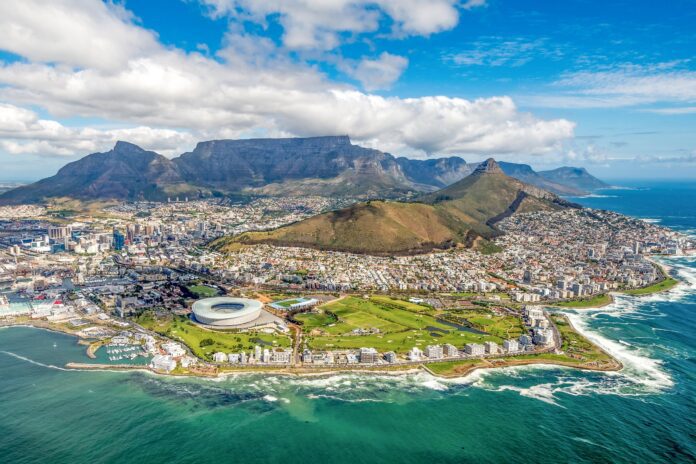
Our video features a full course walk-through by the head coach of the Cape Town Marathon. It does not get any better. Please see this video for details. Other than that, please note that you will pass iconic landmarks like the Mouille Point Lighthouse, City Hall, Company’s Garden, and the Southern Suburbs (Rondebosch/Claremont). The finish line is on Vlei Road with the iconic stadium and Table Mountain in view.
14. Hydration & On-Course Support
- 15 Stations: Spaced roughly every 3km.
- Offerings: Water sachets and Powerade at all stations. Coca-Cola is introduced after 25km.
- Hydration packs are permitted.
15. Rules & Regulations
- Headphones: Officially not permitted for safety and Major evaluation rules, but this mostly applies to elite athletes.
- Minimum Age: 18 for the marathon.
- Timing: Mat-to-mat chip timing for the general field; Gun time for Elites.
16. Spectator Experience
- Rondebosch (Km 15-22): The highest energy zone with local bands and “gees” (spirit).
- Woodstock (Km 27-29): A critical “wall” area where support is needed.
- Sea Point (Km 40): The final 2km push.
- Finish: The “Blue Carpet” is for runners, but spectator stands offer a clear view of the final 200m.
17. Community & Running Culture
Check out local groups like Community Track Club, The Nine Four, Must Love Hills, or Running Late Club for daily shakeout runs leading up to Sunday.
18. Food & Local Specialties
Cape Town’s food scene is as diverse as its landscape.
- The Gatsby: The legendary “foot-long” sandwich that is a local rite of passage.
- V&A Waterfront: Head here for Smashburgers and the famous milkshakes at Gibson’s.
- Seafood & Traditional: Visit Hout Bay for fresh fish and chips or Mzoli’s in Gugulethu for a traditional braai (BBQ) experience.
- Vegetarian & Plant-Based: Cape Town is world-class for vegetarians.
- Coffee Culture: The city takes coffee seriously. See video for recommendations.
19. Travel & Experience Beyond the Race
- Table Mountain: Take the Aerial Cableway or hike Platteklip Gorge. Pro-tip: Book your tickets in advance online to avoid three-hour queues.
- Boulders Beach: Located in Simon’s Town, this is the only place to see the African Penguin colony up close.
- Robben Island: A somber but essential visit to see where Nelson Mandela was imprisoned. The tours are often led by former political prisoners.
- Bo-Kaap: Walk through the brightly colored houses and sample traditional Cape Malay Koesisters (spiced doughnuts).
- Kirstenbosch Botanical Gardens: Set against the back of Table Mountain, it’s perfect for a recovery walk along the “Boomslang” canopy bridge.
- Cape Point & Cape of Good Hope: Take a day trip to the southwestern-most tip of Africa for dramatic cliffs and lighthouse views.
20. Safari Opportunities
All mentioned reserves are in the Western Cape and are Malaria-Free:
- Aquila Private Game Reserve: Best for day trips and viewing the Big Five.
- Sanbona Wildlife Reserve: Massive (54,000 hectares) and famous for free-roaming white lions. Features the Gondwana Family Lodge for those with kids.
- Gondwana Game Reserve: 4 hours away; the only fynbos-reserve in the world with the Big Five.
- Garden Route Game Lodge: Budget-friendly with great sunrise/sunset drives.
Final Takeaway: The Cape Town Marathon is a rare convergence of a fast course and a world-class destination. For more info on all these talking points, check out the full breakdown in our YouTube video or listen to the Marathon Running Podcast!