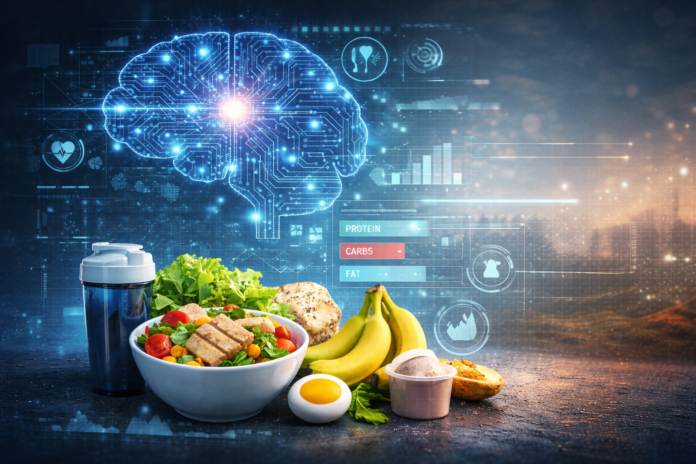
AI tools like ChatGPT and nutrition-tracking platforms are increasingly common among runners looking for quick answers. Larson acknowledges that some of these tools can be useful—but only in very specific ways.
“AI can be great for inspiration,” she says. “Meal ideas, snack options, grocery lists—things that reduce decision fatigue.”
Where problems arise is when runners treat AI as a medical authority.
Larson recalls working with an endurance athlete who began taking creatine after AI assured him it was safe—despite a history of gout. Within days, he experienced his first gout flare-up in two years.
“That’s the danger,” she says. “AI doesn’t know your medical history unless you give it everything, and even then it can miss critical contraindications.”
Her rule is simple: AI should never replace a healthcare professional when health is on the line.
Chronic Undereating and AI Calorie Miscalculations
The Undereating Problem Marathoners Keep Repeating
One of Larson’s biggest concerns with AI-based nutrition trackers is chronic underfueling—especially during marathon training.
She has seen AI platforms underestimate athletes’ energy needs by hundreds, sometimes thousands, of calories.
“I worked with a triathlete who could barely finish workouts,” she explains. “The AI platform had him at 1,800 calories a day. His actual needs were closer to 2,800.”
For marathoners increasing mileage week after week, the consequences are predictable: fatigue, stalled progress, higher injury risk, and in some cases Relative Energy Deficiency in Sport (RED-S).
“AI often doesn’t see the full picture,” Larson says. “It can’t truly account for training stress, recovery needs, hormonal health, or life stress.”
Why AI Meal Plans and Constant Tracking Fall Short
Why Meal Plans—and Endless Tracking—Don’t Work
Despite AI’s ability to generate detailed meal plans in seconds, Larson isn’t a fan.
“Meal plans look perfect on paper,” she says. “But people don’t follow them. Life gets in the way.”
Instead, her approach focuses on teaching runners how to fuel independently—skills that last long after a training cycle ends.
Tracking food can be useful temporarily, but Larson emphasizes it should never be a lifelong requirement.
“My goal is to wean athletes off tracking,” she explains. “They should be able to make confident food decisions without logging every bite.”
For runners with a history of disordered eating, constant tracking can be especially harmful—something AI platforms are not equipped to recognize or manage.
How Marathoners Should Actually Use AI for Nutrition
A Smarter Way to Combine AI and Human Expertise
So how should marathoners actually use AI?
Larson suggests a hybrid approach:
• Use a sports dietitian to establish true energy needs, identify gaps, and build fueling strategies
• Use AI for idea generation, not decision-making
• Provide AI with detailed constraints (time, allergies, preferences)
• Cherry-pick ideas rather than following everything it suggests
For example, a runner struggling to get enough protein at breakfast might ask AI for quick, high-protein ideas that fit a tight morning schedule—then choose what actually works in real life.
“That’s where AI shines,” Larson says. “Volume, speed, and creativity.”
Why Marathon Fueling Still Requires a Human Approach
Fueling Is Still Human
Despite all the innovation, Larson doesn’t believe AI will ever replace the human side of nutrition coaching.
“AI can’t read body language. It can’t hear hesitation in your voice. It can’t recognize when tracking becomes obsessive or when food anxiety is creeping in,” she says.
Fueling a marathon isn’t just about numbers—it’s about confidence, adaptability, and trust in your body.
“Technology is a tool,” Larson adds. “But performance still depends on understanding yourself.”
And for marathoners chasing long-term progress, that understanding remains deeply human.
Alex Larson is a registered dietitian specializing in endurance sports nutrition. She works with runners and triathletes through her private practice, Alex Larson Nutrition, and hosts the Endurance Eats podcast. More information can be found at alexlarsonnutrition.com.