

Also available as a podcast: Listen to the full conversation with exercise physiologist Don Moxley below.
Most runners glance at an HRV number on their watch or ring every morning, wonder what it actually means, and either ignore it or let a red or amber reading throw off their entire workout plan. In a detailed conversation with Marathon Journal, exercise physiologist Don Moxley—who spent 27 years teaching and working in high-performance sports, including helping Ohio State University’s wrestling program win a national title and produce eight All-Americans in 2018 before writing The HRV Book—broke down how heart rate variability works, why everyday stress trips up a runner’s nervous system, and how to turn wearable data into smarter training and long-term health.
What HRV Actually Measures
Your autonomic nervous system runs on two gears: sympathetic (fight or flight) and parasympathetic (rest, digest, and recovery). Humans evolved to react rapidly to physical danger, like spotting a snake on a trail, and calm down once the threat passes. Modern life rarely puts predators in our path, yet our nervous system reacts the exact same way to what Moxley calls “paper tigers”—unexpected calls from a boss or doctor, work deadlines, financial alerts, and daily family logistics.
- Millisecond variation, not a metronome: If your resting heart rate is 60 beats per minute, your heart does not tick rigidly once every exact second. HRV measures the tiny millisecond differences between consecutive heartbeats.
- Higher variability means more reserve: Greater beat-to-beat variation shows your nervous system can shift smoothly between stress and recovery and has bandwidth left to absorb hard training.
- Real-world range: Moxley notes that elite Olympians often post scores between 150 and 200 milliseconds, his collegiate All-Americans needed at least 75 milliseconds to perform at nationals, and everyday athletes fall along their own personal spectrum where upward trends signal stronger adaptation.
- Diagnostic and prescription tool: For runners, a dropping trend acts as an early warning sign that you are maladapting to training load or life stress before fatigue turns into illness or injury.
How to Read Your Watch Without Overthinking It
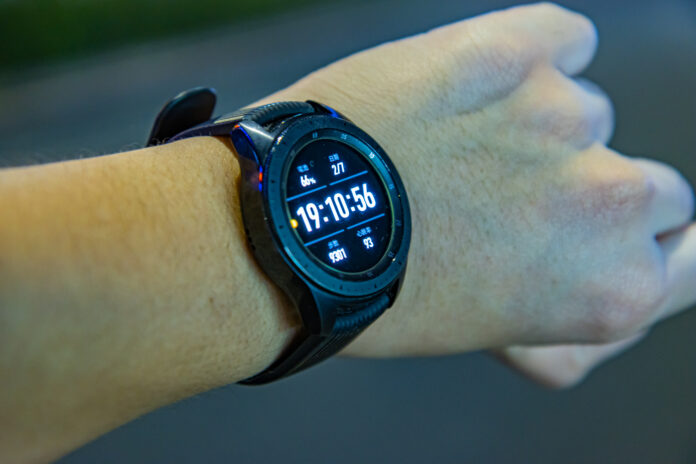
When a watch or ring shows a nighttime HRV score or morning readiness status, Moxley’s golden rule is consistency over comparison.
- Stick to one measurement window: Nighttime resting HRV—available on Coros, Oura, Whoop, and modern smartwatches—captures how your body recovers after a full day of stress without morning interruptions. First thing in the morning or right before a workout also works, provided you compare the same window against itself.
- Never compare device to device: Different brands use different sensors and algorithms, so pick one tracker and watch your personal baseline over weeks rather than comparing an Oura ring against a sports watch.
- Use your wearable like a thermometer: A thermometer tells you the room is cold or that you might be running a fever, but you still pair that number with how you feel. If a suppressed HRV reading lines up with heavy legs, chills, poor sleep, or high stress at work, swap a hard speed session for an easy run, cross-training, or rest.
- Respect intentional recovery: Runners are notorious for assuming more mileage is always better, yet Moxley highlights research in The HRV Book showing that runners following HRV-guided training achieved the same fitness gains as a traditional plan with roughly 20% less work—a huge edge when the hardest part of marathon training is reaching the start line healthy.
The Three Numbers That Matter Most
Modern devices bombard runners with sleep scores, strain ratings, recovery hours, and readiness gauges. Tracking every single metric can backfire and trigger sleep anxiety, a condition known as orthosomnia. Instead of drowning in data, Moxley focuses on three core numbers:
- Nighttime resting heart rate: Tells you whether your cardiovascular fitness is improving or sliding over time, often giving cleaner day-to-day feedback on training adaptation than a static VO2 max estimate.
- Nighttime resting HRV: Shows how effectively your nervous system is shifting out of daily stress and into recovery mode.
- Work output per heartbeat: Measured through wattage on a bike or pace relative to heart rate on a run. If you hold the same pace at a lower heart rate than a month ago, your fitness is climbing; if your heart rate spikes at normal easy pace, you are falling behind on recovery.
When these numbers drift in the wrong direction, look at sleep first. You cannot force yourself to fall asleep on command, Moxley points out, but you can control your sleep environment, evening wind-down, and room temperature to give recovery a better chance. He also frequently uses stationary cycling or ergometer sessions with distance runners to build aerobic engine without the repetitive impact load of every footstrike.
Five Big Rocks Inside a Jar of Purpose
Borrowing from Stephen Covey’s classic “big rocks” analogy—where big rocks must go into a jar before gravel and sand can fit around them—Moxley organizes health span and athletic longevity around five non-negotiable pillars:
- Movement (supported by exercise): Regular daily movement forms the foundation, with structured workouts and low-impact cross-training layering fitness on top.
- Nutrient-dense food (supported by supplements): Whole, nutrient-dense meals come first, with supplements used only to fill specific gaps rather than replace real food.
- Sleep environment: Protecting a dark, cool, consistent sleep setup so restorative recovery can happen naturally.
- Circadian light exposure: Getting natural light into your eyes and onto your skin at the right times of day to anchor your internal clock.
- Community: Surrounding yourself with training partners, family, and people who give your effort meaning.
All five rocks sit inside a larger jar of purpose. Having a specific race date on the calendar gives runners a clear target that helps prioritize sleep, fueling, and smart training over daily distractions. Just as important are deeper personal “whys”—traveling with family, enjoying the outdoors, or staying strong and capable decades down the road. Without a clear purpose, Moxley says, a wearable simply adds more chores to your daily checklist; with purpose, tracking your HRV becomes a practical compass for staying healthy, resilient, and on the run for years to come.
Quick Action Steps for Runners
- Lock in one consistent routine: Track nighttime resting HRV (or a consistent morning check) on a single device rather than comparing different times of day or multiple trackers.
- Pair your score with physical cues: Treat your watch like a thermometer—when a dip in HRV matches heavy legs, poor sleep, or high life stress, dial back intensity or cross-train on a bike.
- Track the big three metrics first: Watch nighttime resting heart rate, nighttime resting HRV, and pace-to-heart-rate efficiency before worrying about secondary watch scores.
- Schedule recovery like a key workout: Put easy days, sleep environment habits, nutrient-dense meals, and morning daylight on your calendar with the same commitment you give long runs.
- Anchor your data to a bigger “why”: Connect your daily numbers to an upcoming race goal and long-term health so wearable feedback guides your training instead of creating stress.
Find more from Don Moxley, including The HRV Book, his podcast, and recovery resources, at trainrecoverwin.com and thehrvbook.com.