

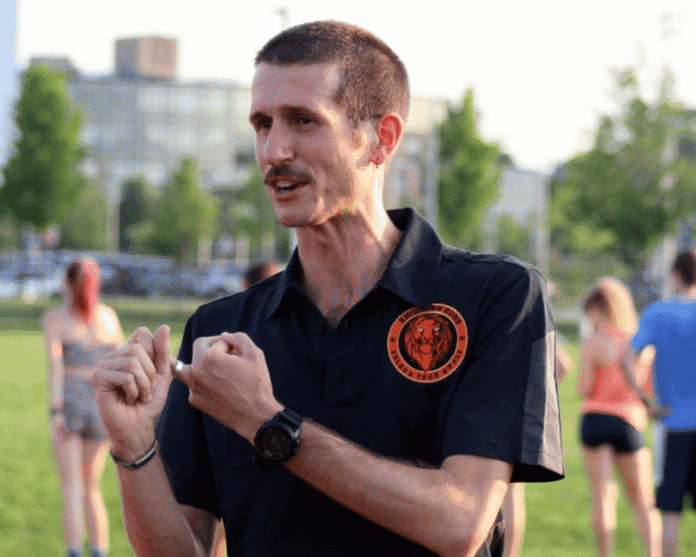
For many marathoners, the training cycle is a solitary, 18-week monastic pursuit of mileage. We often treat the goal race as the only “real” event, avoiding other starting lines out of a fear that they might disrupt our training “bubble.”
However, according to coach Chris Knighton of Knighton Runs, this isolationist approach can actually limit your ceiling on race day. “Racing is a specific skill that’s independent of your physical fitness,” Knighton explains. “You can be in the best physical shape of your life, but if you haven’t developed the skill of racing, you’re not going to live up to that fitness on race day.”
To reach your peak potential, you must transition from being a runner who logs miles to a skilled racer. Here is the definitive guide to strategically using tune-up races to bridge the gap between training and performance.
Linked here are the podcast and YouTube if you prefer to jump to the podcast, you can do so directly within the feature.
The Psychology of the Starting Gun: “Dress Rehearsals”
Workouts indicate what you might be capable of, but they are often poor representations of how you will actually perform under pressure. As Knighton puts it, “The best representation of race performance is another race.”
By incorporating real, chip-timed events into your schedule, you develop three critical psychological edges that cannot be manufactured in training:
1. Exposure Therapy for the Brain
“Tune-ups help you manage the stress levels and the anxiety leading up to race day,” Knighton says. The hours and days leading up to a race are often the most mentally taxing. By racing frequently, you normalize the process. You learn how to handle the adrenaline surge when the starting gun goes off, ensuring your heart rate doesn’t skyrocket in those first few miles of your goal marathon.
2. Finding the “110%” Effort
It is nearly impossible to replicate the intensity of a race in a solo time trial. “It’s hard to eke out every bit of fitness you have on your own,” Knighton notes. The presence of other bib-wearing competitors allows you to find that extra gear. This is how you learn to navigate the “dark places” of a race—that late-stage mental fatigue where your brain tells you to slow down, but your body is still capable of more.
3. Logistic Mastery
From what you eat for breakfast to how you manage the “corral wait,” tune-ups are a live-fire test of your logistics. “You learn how to psych yourself up,” Knighton explains, turning race-day variables into a repeatable, calm routine.
The 18-Week Strategic Build
Knighton structures a marathon season through three distinct stages of development. To maximize the benefit, these races should increase in distance as you approach your goal race, creating a “crescendo” of effort.
Stage 1: The Baseline (Month 1)
The first month of an 18-week plan is focused on base building—increasing mileage and establishing a routine of easy running.
-
The Strategy: If you race in the first four weeks, it shouldn’t “count” as a major tune-up. “You’re not in peak shape yet,” Knighton reminds us.
-
The Baseline: For new athletes, Knighton often uses a two-mile time trial to “get a baseline of where you’re starting” and to set early training zones.
Stage 2: Speed and Physiology (Month 2)
In the second month, the focus shifts toward shorter, higher-intensity paces like the mile, 5K, and 10K.
-
The Race: Schedule a 5K or 10K toward the end of this month.
-
The Insight: “A 5K tells me if an athlete is physiologically more predisposed to speed or more predisposed to endurance,” Knighton explains. If your 5K speed is the “limiting factor” for your marathon goal, this stage identifies that weakness while there is still time to fix it.
Stage 3: The Specific Stage (Months 3–4)
The final months focus on marathon-specific demands: tempo runs, long runs at marathon pace, and peak mileage.
-
The Half Marathon “Gold Standard”: The half marathon is the ultimate tune-up. “It’s a very common practice to do a half marathon as a tune-up for a marathon,” Knighton says. It is the most accurate predictor of your final race potential.
-
The Critical Timing: This must be scheduled 4 to 8 weeks before your goal marathon. “Any closer than four weeks is a huge risk,” warns Knighton. “A half marathon is long enough that it’s going to cause a lot of damage… you need that time to recover.”
The “Train-Through” Methodology
A major key to Knighton’s philosophy is that you should not taper for tune-up races. Tapering is a once-a-season luxury reserved for your goal marathon.
“You want to utilize the concept of cumulative fatigue,” Knighton explains. “You’re training under this continuous load, and you’re prepared for the exhaustion you’re going to feel in the last 10K of the marathon.”
How to Manage the Race Week Load:
-
The Midweek Pivot: To freshen up slightly without dropping total mileage, replace one of your intense midweek sessions with the weekend race. If you usually do two hard sessions, do one.
-
The 4-Day Buffer: Ensure the 3–4 days immediately before the race contain “no intensity work.” Keep the legs moving, but keep them easy.
-
The Recovery Pivot: The week following a hard tune-up race should be a “cutback” week. “Give yourself a physical break and a mental break,” Knighton suggests. This means dropping your mileage to 75–90% of your normal volume and removing all high-intensity work to allow your body to absorb the race effort.
Data Over Guesswork: The VDOT Advantage
Coach Knighton strongly advises against using watch-based predictors (like Garmin or Strava) or heart rate analysis to set goals. “They’re often not very accurate… heart rate can be super inconsistent,” he notes.
Instead, he advocates for the VDOT calculator based on Jack Daniels’ formulas. By plugging in a recent race time, you remove the guesswork:
-
Accurate Training Paces: Knowing exactly how fast your “Easy,” “Threshold,” and “Interval” runs should be.
-
Scientific Predictions: A realistic projection of what you are capable of. “It tells you the potential you have as an athlete,” Knighton explains. If your 10K or Half Marathon times project to a faster marathon than you’ve ever run, it’s a clear indicator of what you are capable of if you execute correctly.
Final Takeaway
“I think doing [a race] no more than once a month and building up in distance towards your goal race is the perfect frequency,” Knighton concludes. If you typically only run one big race a year, you are missing out on the competitive callousing required to succeed. By finding this rhythm, you transition from a runner who “logs miles” to a confident racer ready to execute on the world stage.
About the Expert: Chris Knighton is the founder of Knighton Runs and author of “Run Faster Marathons.” He is also a guest writer for MarathonJournal.com. He specializes in coaching performance-driven athletes for World Marathon Majors and Boston Qualifiers. Learn more at KnightonRuns.com or follow him on Instagram @knightonruns.