
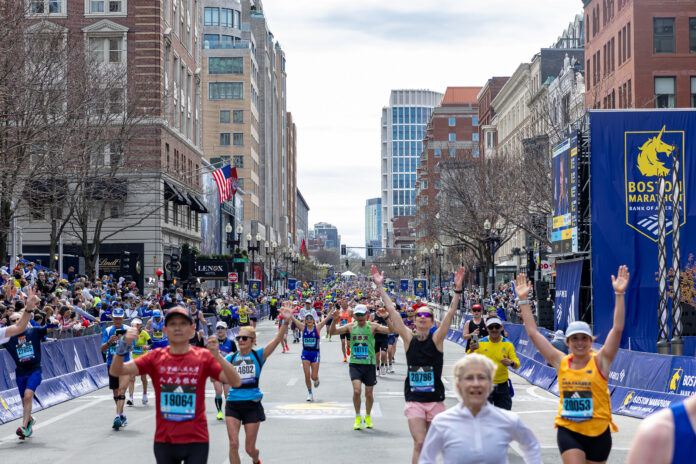
There are many marathons, but there is only one Boston.
For most runners, it represents something more than just another race on the calendar. It is a goal, a benchmark, and for many, a defining moment in their running journey. You do not simply sign up for Boston—you earn your place there.
If you are heading to the Boston Marathon in 2026, or working toward qualifying in the future, here is what truly matters.
Why Boston Still Stands Apart
First held in 1897, the Boston Marathon is the oldest annual marathon in the world. Over more than a century, it has remained one of the most respected and sought-after races despite the growth of the sport and the rise of other major marathons.
Part of that prestige comes from its structure. Boston is not a lottery race. Entry requires either meeting strict qualifying standards or committing to a charity program. Even then, qualifying does not guarantee entry. Demand consistently exceeds capacity, and runners often need to outperform their qualifying time just to secure a spot.
That alone sets Boston apart. It is not just about participation—it is about achievement.
Qualifying Has Become Increasingly Competitive
Boston qualifying times are structured by age and gender, but the broader trend is clear: the race is getting harder to get into.
As participation in marathons continues to grow, so does the number of runners capable of hitting qualifying marks. At the same time, the Boston Marathon field size has remained relatively stable at around 30,000 runners. The result is a tightening selection process where a time that once guaranteed entry may no longer be sufficient.
For many runners, this means building a buffer—running well under the qualifying standard—to increase the likelihood of being accepted.
Understanding the Course
Boston is often described as a downhill course, but that description is incomplete.
While the course has a net downhill profile, it also includes significant climbing—particularly in the later stages of the race. There is very little truly flat running. Instead, the course is defined by continuous rolling terrain.
The first portion of the race, beginning in Hopkinton, trends downhill and can feel deceptively easy. This is where many runners make their biggest mistake by pushing the pace too early.
The middle miles allow for some rhythm, but the real challenge begins after mile 16 with the Newton Hills. These climbs come in succession and culminate in Heartbreak Hill around mile 20. While none of the hills are extreme in isolation, their placement late in the race—combined with earlier fatigue—makes them particularly demanding.
From there, the course gradually descends into Boston, leading to the final stretch on Boylston Street. For runners who have paced well, this is an opportunity to finish strong. For others, it can be a difficult final segment.
Boston is not a course that rewards aggression early. It rewards restraint.
Strategy Matters More Than Speed
The Boston Marathon is less about raw fitness and more about execution.
The early downhill miles require discipline. The middle miles require patience. The Newton Hills require controlled effort rather than pace. And the final miles reward those who have managed their energy effectively.
A common mistake is treating Boston like a typical personal record attempt. While fast times are possible, the course demands respect. Runners who approach it strategically tend to have far better outcomes than those who rely solely on pace targets.
2026 Update: Six-Wave Start
One of the most notable changes for 2026 is the introduction of a six-wave start system.
In previous years, waves were significantly larger, leading to congestion—especially in the early miles. The updated structure reduces the number of runners per wave and spaces out start times more effectively.
This change is designed to improve flow on the course, reduce crowding, and allow runners to settle into pace more naturally. While it does not eliminate all congestion, it represents a meaningful improvement to the overall race experience.
Race Week Logistics
Boston requires more logistical planning than most marathons, particularly on race morning.
Expo
The Boston Marathon Expo takes place at the Hynes Convention Center and runs from Friday through Sunday. All runners must pick up their bibs in person. Beyond that, the expo serves as a central hub for the running community, featuring brand activations, panels, and product releases.
Transportation to the Start
All runners are transported by bus from Boston Common to the start line in Hopkinton. Boarding begins early in the morning, with assigned loading times based on bib number.
The bus ride takes approximately 45 to 60 minutes. Most runners arrive in Hopkinton several hours before their start time.
Athlete Village
Once in Hopkinton, runners wait in Athlete Village until their wave is called. This can involve extended periods of waiting in varying weather conditions.
Preparation here is essential. Runners should plan for warmth, bring additional nutrition, and be ready for limited shelter.
Gear Check
Gear check is located near the finish line in Boston, not at the start. Bags must be dropped off before boarding the buses. Any items brought to Hopkinton must be carried or discarded before the race begins.
This is one of the most important logistical details to understand ahead of time.
Fueling on Course
The Boston Marathon provides Maurten gels on course at several points, including approximately miles 12, 17, and 21.5.
While these stations can supplement a fueling plan, they should not replace one. Runners should rely on the strategy they practiced during training, typically consuming fuel at regular intervals throughout the race.
Boston is not the environment to experiment with new nutrition.
Boston Marathon Weekend
One of the defining aspects of Boston is that it extends far beyond race day.
Throughout the week, the city hosts a wide range of events, including shakeout runs, brand activations, panel discussions, and community gatherings. There are also official events such as the Boston 5K and Fan Fest.
Because of the volume of activity, planning ahead can make a significant difference. Marathon Journal has compiled a comprehensive and continuously updated schedule of events, complete with locations and links for easy navigation:
For runners looking to make the most of their time in Boston, this serves as a practical guide to everything happening throughout the week.
Common Mistakes
Several patterns emerge each year among runners who struggle on the Boston course:
Going out too fast in the early downhill miles
Underestimating the cumulative impact of the hills
Delaying fueling until it is too late
Arriving unprepared for the length of race morning
Not accounting for weather variability
Boston does not typically forgive these mistakes.
Final Thoughts
The Boston Marathon is not defined by its course alone, but by what it represents.
It is a race that demands preparation, rewards discipline, and carries a level of significance that few others can match. Whether it is your first time running Boston or one of many, the experience remains distinct.
For those who have qualified, it marks the culmination of months—often years—of effort.
And for those still pursuing it, it remains one of the most meaningful goals in the sport.
Boston is not just another marathon. It is something you work toward—and once you arrive, something you remember.