
The global running community is mourning after a devastating tragedy at the Leiden Marathon in the Netherlands. Rosalie, a 15-year-old girl from the nearby town of Oegstgeest, collapsed and died just four kilometers from the finish line of the half marathon. The heartbreaking loss has cast a somber shadow over the event and sparked an international conversation regarding safety, youth participation, and regulatory policies in mass endurance sports.
What Happened?
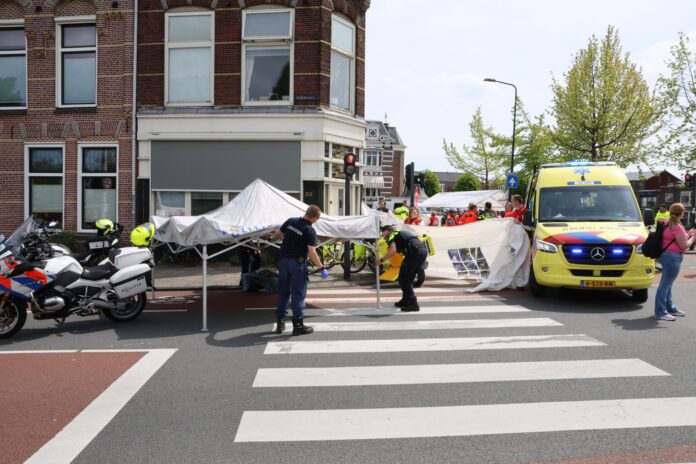
The incident occurred on a Sunday morning during the 21.1-kilometer (13.1-mile) race. Rosalie suffered a sudden medical emergency at a busy intersection roughly two hours after the race began.
Despite ideal weather conditions—temperatures hovering around a comfortable 15°C (59°F) with a light breeze—emergency personnel had to administer immediate medical care inside a privacy area before a trauma helicopter arrived at the scene. Tragically, she could not be resuscitated.
Upon learning of the tragedy, race organizers immediately halted the remaining events scheduled for later that afternoon, including the 10-kilometer race and the children’s 2.1-kilometer run, out of respect for Rosalie and her loved ones. Shortly after, her sister, Loulou, posted a moving tribute online, writing: “I love you so much. You were the best sister ever. I’m going to miss you. You are in my heart.”
A Prepared Athlete Weeks Away From Elegibility
Initial media reports heavily scrutinized the race’s minimum age limit of 16 for the half marathon, raising questions about how a 15-year-old was able to bypass the registration system. However, crucial context shared by Rosalie’s family paints a much clearer picture of the circumstances.
Rosalie was not a young child casually entering a dangerous race on a whim; she was an incredibly dedicated, highly athletic, and experienced runner who was less than a month away from her 16th birthday—the official age threshold for the event.
Through a statement released by the Dutch victims’ advocacy organization Namens de Familie, her family cleared up any misconceptions regarding her readiness. They emphasized that Rosalie was deeply sporty, well-prepared, and had successfully completed long-distance runs in the past. The statement noted that “in her circle, there was no one who doubted that she would successfully complete the distance.”
The Family Absolves Race Organizers
In the wake of the tragedy, Leiden Marathon race director Tjeerd Scheffer noted that the event’s online registration relies on an “honor system,” where data is self-reported and not automatically cross-referenced with government identification. While this sparked an industry-wide debate on whether mass-participation sports should implement strict ID verification at bib pick-up, Rosalie’s parents have moved swiftly to protect the event from unfair scrutiny.
The family explicitly stated that the race organizers bear “no blame whatsoever” for what occurred. They clarified that they, alongside Rosalie, accepted full responsibility for her registration and participation, choosing to focus on honoring her memory rather than placing blame on the organization.
The Ongoing Sports Science Discussion
While the specific physiological cause of Rosalie’s death remains confidential out of respect for her family, the incident has naturally kept sports scientists and athletics federations talking about the biological strain of long-distance running on young bodies.
The Dutch athletics federation (Atletiekunie) generally recommends that 15-year-olds limit their competitive distances to 10 kilometers. Medical experts advise caution for teenagers due to two primary developmental factors:
- Cardiovascular and Thermoregulatory Stress: Cardiac events in road racing are statistically rare, but adolescents have developing cardiovascular and heat-regulation systems. Extreme physical exertion can also trigger underlying, undetected congenital heart conditions (such as hypertrophic cardiomyopathy) that otherwise go unnoticed in daily life.
- Musculoskeletal Development: The heavy, repetitive impact of training for 21.1 kilometers poses unique risks to adolescent growth plates and developing joints, requiring careful monitoring to avoid chronic overuse injuries.
Moving Forward with Grace
Sudden medical emergencies in road racing are an inherent risk that organizers work tirelessly to mitigate through on-course automated external defibrillators (AEDs), rapid-response medical tents, and mobile paramedics.
The tragedy in Leiden will undoubtedly influence how race directors worldwide think about age policies and digital verification systems moving forward. However, the grace shown by Rosalie’s family serves as a poignant reminder to the running world: behind the regulatory debates and sports science data is a deeply loved, talented young athlete whose passion for the sport will not be forgotten.