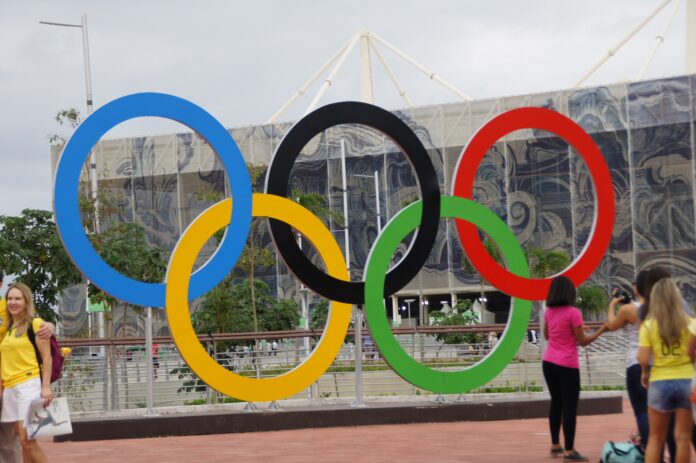
When World Athletics released the official LA28 Olympic Qualification Standards for the Los Angeles 2028 Olympic Games, the message to the global track and field community was clear: getting to the start line in California will require unprecedented speed.
With the framework shifting toward a more exclusive balance—roughly 40% of athletes qualifying via direct entry standards and 60% through world rankings (a tightening from the 50-50 split seen at the Paris 2024 Games)—the pressure is instantly turned up. Nowhere is this tightening felt more profoundly than in the distance and endurance events,where the bars have been raised significantly higher than any previous cycle.
The Endurance Squeeze: Marathon Marks Tumble
The most striking adjustments have hit the long-distance and road events, reflecting the staggering evolution of modern shoe technology, nutrition, and global depth.
- The Men’s Marathon: The standard drops a dramatic 3 minutes and 10 seconds, moving from 2:08:10 (Paris) down to a razor-sharp 2:05:00 for LA28.
- The Women’s Marathon: The target plummets by 4 minutes and 30 seconds, shifting from 2:26:50 to an elite 2:22:20.
To put these numbers into perspective, both entry targets sit faster than the respective Olympic records set on the tough course at the Paris 2024 Games. Alternatively, World Athletics has built an alternate pathway where finishing inside the Top 5 at a Platinum Label marathon satisfies the automatic qualifying performance, but for time-triallists, the window is fiercely unforgiving.
Middle and Long Track: Unforgiving Seconds Cut Across the Board
It isn’t just the 26.2-mile distance feeling the squeeze. On the oval, every single distance and middle-distance discipline demands personal-best-level execution just to earn an automatic ticket.
Here is how the new LA28 track standards stack up against the Paris 2024 benchmarks:
- 800m Men: Drops 1.70 seconds, from 1:44.70 (Paris) to 1:43.00 (LA28).
- 800m Women: Drops 2.30 seconds, from 1:59.30 (Paris) to 1:57.00 (LA28).
- 1500m Men: Drops 3.50 seconds, from 3:33.50 (Paris) to 3:30.00 (LA28).
- 1500m Women: Drops 5.00 seconds, from 4:02.50 (Paris) to 3:57.50 (LA28).
- 5000m Men: Drops 15.00 seconds, from 13:05.00 (Paris) to 12:50.00 (LA28).
- 5000m Women: Drops 18.00 seconds, from 14:52.00 (Paris) to 14:34.00 (LA28).
- 10,000m Men: Drops 12.00 seconds, from 27:00.00 (Paris) to 26:48.00 (LA28).
- 10,000m Women: Drops 10.00 seconds, from 30:40.00 (Paris) to 30:30.00 (LA28).
- 3000m Steeplechase Men: Drops 7.50 seconds, from 8:15.00 (Paris) to 8:07.50 (LA28).
- 3000m Steeplechase Women: Drops 17.00 seconds, from 9:23.00 (Paris) to 9:06.00 (LA28).
The most radical shifts highlight a massive acceleration in depth:
- The women’s 5,000m standard has been slashed by a staggering 18 seconds down to 14:34.00.
- The women’s steeplechase requirement dropped by 17 seconds to 9:06.00.
- In the men’s ranks, the 5,000m mark dropped by 15 full seconds to 12:50.00, transforming what used to be a very select international time into a prerequisite entry barrier.
- The metrics in the 1,500m demand sub-3:30 for men (3:30.00) and sub-3:58 for women (3:57.50), signaling that tactical championship racing alone will no longer suffice; athletes must possess elite, world-class time-trial credentials.
What Everyday Runners Need to Know: Olympic Standards vs. National Trials Standards
For recreational distance runners and casual track fans tracking the news, it’s easy to confuse these headline numbers with domestic race qualifiers. Here is how to make sense of the structure and why hitting a “standard” means two very different things depending on context:
1. International Entry Standard vs. Domestic Trials Standard
- World Athletics Olympic Standard (Global): These ultra-fast marks (like 2:05:00 in the marathon) are created by World Athletics to limit total Olympic field sizes and ensure only the absolute top global athletes qualify automatically.
- National Trials Standard (Domestic): Governing bodies like USATF set their own domestic standard (e.g.,~2:18:00 for men and ~2:37:00 for women in the marathon). Hitting this mark doesn’t get you to the Olympics—it simply earns you a bib at your country’s national Olympic Trials race along with 150 to 200 of your nation’s top runners.
2. Placing Top 3 Isn’t a Guaranteed Ticket
Winning or finishing in the Top 3 at a country’s Olympic Trials is only half the battle. To be named to the official Olympic team, that athlete must also satisfy World Athletics’ requirements—either by achieving the 2:05:00 / 2:22:20 standard during the qualification window or by ranking high enough in World Athletics’ global point system.
3. Why World Rankings Matter More Than Ever
Because World Athletics capped automatic entry standards at 40% of the overall field, the remaining 60% of Olympic slots will be filled using the World Athletics Global Rankings. Runners earn points not just for their time, but for where they place in high-tier international races (like Diamond League meets or World Marathon Majors). For athletes outside the automatic standard, strategic race planning and consistent top-tier finishes are now essential.