

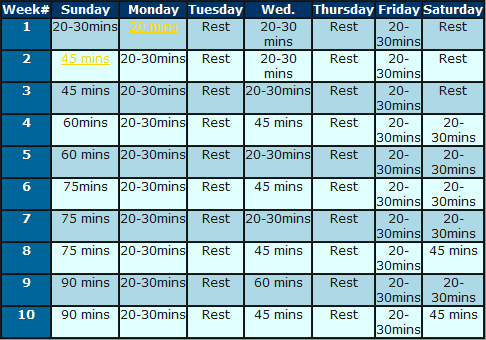
Marathon 101 Masterclass. Whether you are preparing for your first 26.2, chasing a Boston Qualification, or resetting your training ahead of a new macrocycle, this series brings training back to core physiological fundamentals. Even experienced athletes often overcomplicate their training while neglecting foundational mechanics—leading to plateaus, overtraining, and overuse injuries. This series strips away the noise to provide a structured, evidence-based roadmap. Today, we learn about the Marathon Training Blueprint.
Masterclass Series Overview
Our four-part masterclass is designed to guide you through every phase of the marathon journey:
- Part 1 (Today): The Blueprint & The Aerobic Engine — Setting up a 16-to-20-week macrocycle and physiological readiness.
- Part 2: Workout Structure, Speed & The Long Run — Demystifying quality sessions, threshold work, and long-run execution.
- Part 3: Fueling, Gear, Mechanics & Tapering — Carbohydrate math, gut training, super shoe rotations, and surviving taper physiology.
- Part 4: Race Week Logistics, Pacing & Mental Strategy — Reverse-engineering race morning, pacing without banking time, and navigating late-race fatigue.
Step 1: Pre-Block Benchmarks & Readiness Audit
A standard marathon plan spans 16 to 20 weeks. However, a training block is designed to build upon an existing baseline—not build one from scratch. Jumping into a 26.2 program without an established foundation significantly increases injury risk.
Runner Profiles & Entry Benchmarks
| Profile | Goal | Pre-Block Volume | Long Run Readiness | Experience Baseline |
| First-Timer | Healthy finish | 20–25 mpw (30–40 km/wk) | 8–10 miles comfortably | 4–6 months consistent running |
| Intermediate | PR / Sub-4:00 / Sub-3:30 | 30–35 mpw (48–56 km/wk) | 10–12 miles at easy pace | 12+ months running; recent 10K/HM |
| Advanced | BQ / Sub-3:00 / Elite Amateur | 45–55+ mpw (72–90+ km/wk) | 13–15 miles effortlessly | Multiple years of continuous training |
The Self-Audit Checklist
Before starting Week 1 of your chosen plan, evaluate your readiness across three metrics:
- Consistency Check: Have you logged 3–4 runs per week for the past 8 weeks without missing time due to pain or injury?
- Volume Check: Is Week 1 total mileage within 10–15% of your average weekly volume over the previous two months?
- Orthopedic Screening: Can you complete 25 single-leg calf raises, 20 single-leg glute bridges, and a 60-second single-leg balance per side without pain or compensation?
Step 2: The Medical Perspective on Adaptation
From an orthopedic and cardiovascular perspective, rapid increases in workload lead directly to breakdown. Every tissue adapts to stress, but at drastically different rates:
- Muscular vs. Tendon Adaptation: Skeletal muscle adapts relatively quickly due to rich blood supply. Tendons, ligaments, and bone matrix adapt much slower. Rapid increases in training cause muscular strength to outpace connective tissue integrity, leading to tendinopathy, stress fractures, and ligament strain.
- Cardiovascular Efficiency: As training progresses, blood distribution improves through capillary expansion in the lungs and working muscles. Additionally, lower-extremity muscle contractions assist venous return, reducing direct cardiac strain during exertion.
- Central Nervous System (CNS) Adaptation: Repeated aerobic effort refines neural pathways, lowering the mental and physiological cost of movement so running feels progressively more automatic.
Step 3: Realistic Goal Setting & The Half Marathon Formula
Setting race goals based on desire rather than current fitness leads to metabolic burnout and mid-race decay.
Race Time Prediction Formula
To estimate a realistic marathon finishing target, take a recent half-marathon time, double it, and add a physiological decay buffer based on your aerobic development:
$$\text{Predicted Marathon Time} = (2 \times \text{Half Marathon Time}) + \text{Buffer}$$
- Elite / Advanced Runners: Add 5 to 8 minutes
- Intermediate Runners: Add 8 to 12 minutes
- Beginner / First-Time Marathoners: Add 12 to 15+ minutes
This buffer accounts for metabolic decay (glycogen depletion) and cardiac drift (increased heart rate over time at constant output). A half-marathon pace cannot simply be maintained twice over without significant aerobic depth.
Step 4: The Physiology of Zone 2 & The 80/20 Rule
The core driver of marathon endurance is a deeply developed aerobic engine. Approximately 80% of total weekly volume should be executed in Zone 2—an effort level where conversation is easy and effort feels comfortable.
Why Low-Intensity Training Works
- Angiogenesis: Low-intensity, long-duration running stimulates capillary growth around muscle fibers, maximizing oxygen delivery to working tissues.
- Mitochondrial Biogenesis: Easy volume increases the size and density of mitochondria within muscle cells, boosting your capacity to turn fat into usable energy.
- Fat Oxidation Efficiency: Operating below your aerobic threshold trains the body to utilize fat stores for fuel, sparing limited muscle glycogen for the final miles of the race.
The “Gray Zone” Trap (Zone 3)
Running in Zone 3 (“moderately hard”) feels productive, but it represents an incomplete middle ground: it generates too much fatigue to allow proper recovery between key workouts, while failing to provide a strong enough stimulus for peak speed or anaerobic adaptions. Polarized training (80% easy, 20% hard) ensures hard sessions remain quality sessions while easy days drive systemic recovery.
Step 5: Structuring Macrocycles and Microcycles
Marathon plans are organized around structured timeframes designed to balance progressive overload with supercompensation:
- Macrocycle: The full 16-to-20-week training block targeting race day.
- Microcycle: The individual 7-day training unit balancing stress and recovery days.
The 3:1 Progression Pattern
Most structured programs utilize a 3-week build, 1-week down-week microcycle pattern:
- Week 1: Progressive Build (Base Volume)
- Week 2: Progressive Build (+5-10% Load)
- Week 3: Progressive Build (Peak Stress)
- Week 4: Recovery Down-Week (-20-30% Volume)
Fitness improves during rest, not during the workout itself. The down-week allows accumulated fatigue to clear, glycogen reserves to fully restore, and micro-tears in connective tissue to repair—leaving you stronger for the next build block.
Next Steps
If you are constantly modifying plans on the fly, second-guessing workout paces, or pushing through recurring niggles, consider working with a running coach to guide your block. A coach serves as an insurance policy for your training cycle, providing accountability and objective adjustments when fatigue sets in.
Stay tuned for Part 2 of the masterclass series, where we dissect Workout Structure, Speed Work, and Mastering the Long Run.